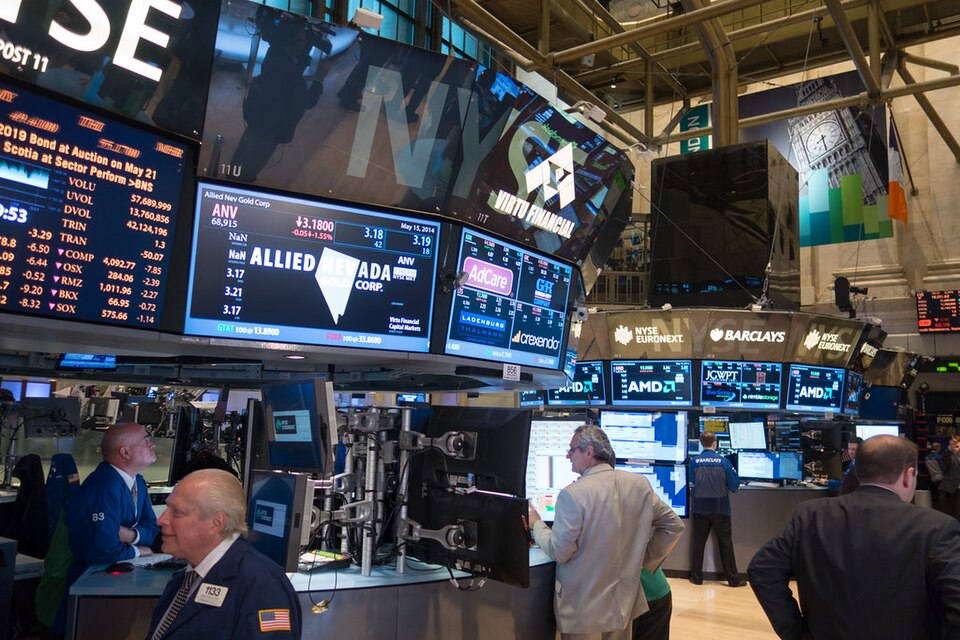
At 8:01 AM on August 1, 2012 — ninety minutes before US markets opened — Knight Capital Group's monitoring systems began generating error emails.
Not one. Not five. Ninety-seven.
Each one said the same thing: "Power Peg disabled."
Power Peg was a trading system from 2003. It had been deprecated for years. Nobody at Knight was using it. The engineers who built it had long since moved on. The emails were technically accurate — Power Peg was disabled — but in the way a smoke alarm is technically accurate when it goes off because you burned your toast. The engineers on duty that morning saw the alerts. They noted the volume. They decided it was noise.
It was not noise. It was a system telling them, with all the urgency it was capable of generating, that something was catastrophically wrong.
Ninety minutes later, Knight Capital began dying. By lunchtime, forty-five minutes after markets opened, it was effectively over. A company that had spent seventeen years building one of the most sophisticated trading operations in the world lost $440 million — not from bad bets, not from fraud, not from a market crash. From a flag that pointed at the wrong code.
1,400 people. Seventeen years. $440 million. Forty-five minutes.
The Machine at the Centre of American Markets
To understand what was lost on August 1, 2012, you need to understand what Knight Capital actually was.
Knight Capital Group was not a household name. It was not the kind of firm that appeared in newspaper business sections unless something went wrong. It was the plumbing of American financial markets — invisible, essential, and operating at a speed and volume that most people never thought about.
Knight was one of the largest market makers in the United States. A market maker's job is to stand between buyers and sellers — to continuously quote prices at which they will buy and sell securities, earning a tiny profit on each transaction from the spread between the two. When you bought a stock through your brokerage account in 2012, there was roughly a one-in-ten chance that Knight Capital was on the other side of that trade.
Approximately 10% of all US equity trading passed through Knight's systems on a normal day.
The firm processed millions of trades daily. Its systems operated at microsecond speeds. It had built seventeen years of proprietary code, refined through thousands of market cycles, tuned to handle any condition the market could generate. By 2012, Knight had 1,400 employees and was processing more trading volume than the New York Stock Exchange itself.
This was not a firm that cut corners. It was a firm that had survived the dot-com crash, the 2008 financial crisis, and the 2010 Flash Crash. It knew what volatility looked like. It had risk controls. It had monitoring systems.
None of it was enough.
SMARS and the Assumption That Killed a Company
Knight's engine was a system called SMARS — the Smart Market Access Routing System. This was the firm's proprietary high-speed algorithmic order router, the piece of infrastructure that sat between Knight's trading desks and the markets.
SMARS worked like this: a trader or algorithm would submit a "parent" order — buy 100,000 shares of Stock X. SMARS would receive that order, break it into smaller "child" orders, and distribute those child orders intelligently across exchanges and trading venues to minimise market impact. It was sophisticated, fast, and had been refined over years of production operation.
SMARS ran on eight servers. The load from incoming orders was distributed across all eight. Any of the eight servers could handle any incoming order at any time.
This architecture had one critical, unspoken assumption embedded into its design: all eight servers are running identical code.
If they weren't — if one server behaved differently from the others — SMARS had no mechanism to detect it. No version check. No behavioural comparison. No health signal beyond "is the server up?" The system assumed uniformity. It did not verify it.
That assumption was about to be violated.
The Ghost in the Machine: Power Peg
To understand what activated on the morning of August 1, you have to go back nine years.
In 2003, Knight's engineers built a trading system called Power Peg. Its purpose was manual market making — a tool that traders could use to buy and sell stocks continuously, accumulating and shedding positions at speed. Power Peg was designed to be aggressive. It had no cumulative position limit. It had no automatic stop. It would keep trading for as long as it was told to trade.
These were not oversights. In 2003, Power Peg was operated by human traders who provided the judgment that the software lacked. The humans were the circuit breaker. The humans knew when to stop.
By 2005, Power Peg had been deprecated. Knight's clients had moved to newer systems. The engineers marked it unused, changed the default configuration to prevent accidental activation, and moved on. But they did not delete the code. Power Peg remained in the SMARS codebase, dormant, its activation controlled by a single configuration flag.
Why wasn't it deleted? The same reason dangerous code is never deleted: it was entwined with other systems. Removing it cleanly would have taken significant effort. It wasn't hurting anyone. It was marked deprecated. The flag was set to off. They would get around to it eventually.
Two years later, a refactor broke the Power Peg test suite. Nobody was using Power Peg. The tests were deleted. The code remained. The flag remained.
And then, in 2012, a new system needed to be built.
The Decisions That Loaded the Weapon
Reusing the deprecated flag
In mid-2012, the New York Stock Exchange launched a new initiative called the Retail Liquidity Program — a mechanism designed to give retail investors better execution prices. Knight, as a major market maker, needed to participate. Engineers built new RLP code and needed a way to activate it on the SMARS servers.
The RLP code needed a configuration flag. Engineers looked at the available options. There was an unused flag in the system — the old Power Peg activation flag. Power Peg was dead. The flag wasn't being used. It was the logical choice.
The assumption: the flag is just a label. Power Peg is gone. Using the flag means activating the new RLP code.
The reality: on any server still running old code, the flag would activate Power Peg.
Nobody checked whether this could happen. Nobody asked what the flag had previously done or whether any server in the fleet might still respond to it in the old way. The flag was repurposed without a full audit of what it still meant to the codebase.
A manual deployment with no verification
The new RLP code was ready for deployment by July 27, 2012 — five days before the NYSE's Retail Liquidity Program launch. The deployment was a manual process: a technician physically connected to each of the eight SMARS servers and copied the new code across.
Knight had no written deployment procedure. No checklist. No peer review requirement. No automated system to verify that all eight servers were running the same version of the code after deployment.
The technician deployed to seven servers. The eighth was missed.
There was no post-deployment verification. No automated check that confirmed all eight servers were running identical code. Nobody knew the eighth server hadn't been updated.
And then the ninety-seven error emails arrived at 8:01 AM — the eighth server announcing, repeatedly, that it had been configured with the Power Peg flag but was running the old code that knew exactly what that flag meant. The emails were seen. They were not acted on.
No kill switch, no position limits, no circuit breaker
Power Peg, as designed in 2003, had no automatic stop. When it was reactivated on the eighth server, it did what it had always done: it received parent orders from SMARS, generated child orders continuously, and kept trading. It had no awareness of how much money it was spending. It had no concept of risk. It had no circuit breaker that would detect abnormal behaviour and halt.
SMARS, routing orders to all eight servers equally, had no way to know that one server was executing orders differently from the others. Seven servers were correctly implementing the new RLP logic. One server was implementing a nine-year-old algorithm with no position limits. From SMARS's perspective, all eight servers were responding normally.
The weapon was loaded. The market opened at 9:30 AM.
Forty-Five Minutes
The first signs appeared almost immediately. Stocks in 154 companies began moving erratically. Price swings of 5% to 10% appeared across the board. Knight's algorithms were supposed to reduce market impact, not create it.
Inside Knight's offices, traders watching the positions couldn't understand what they were seeing. The numbers were moving in the wrong direction — and accelerating. Every time SMARS sent a parent order to its eight servers, seven handled it correctly and one generated a cascade of child orders with no stop condition, building positions that Knight never intended to hold.
At its peak, Knight Capital was responsible for 20 to 50% of the total trading volume in affected stocks. The firm had become the market.
By the time anyone understood what was happening — by the time the decision was made to shut down — the damage was already enormous:
- 4,026,087 trades executed
- 154 stocks affected
- 397,245,000 shares traded
- $3.5 billion in unwanted long positions
- $3.15 billion in unwanted short positions
The scale is almost impossible to absorb. In forty-five minutes of automated trading, Knight Capital had accumulated positions larger than the GDP of some countries — positions it never wanted, at prices distorted by its own buying and selling.
The Fix That Finished Them
When Knight's engineers finally understood what was happening, they moved to fix it. The goal was to stop the eighth server from running the old Power Peg code.
Under pressure, working fast, they made a decision: redeploy the code to all eight servers to ensure consistency.
They deployed the wrong code.
Instead of pushing the new RLP code to all eight servers — which would have corrected the problem — they deployed the old code, including the Power Peg logic, to all eight servers. What had been one server causing damage became eight servers running simultaneously with no position limits and no stop condition.
The positions accumulated even faster. The losses compounded in real time. Knight's net capital — the financial foundation the company was required to maintain by regulators — was being destroyed hundreds of millions of dollars at a time.
By 10:15 AM, the bleeding had been stopped. By then, the damage was done.
The Aftermath
Knight's leadership immediately contacted the Securities and Exchange Commission and requested that the trades be cancelled. The argument: this was clearly an error, the prices were distorted, the trades should be unwound.
SEC Chair Mary Schapiro declined. The trades stood. The logic: Knight's failure to implement proper risk controls was Knight's problem, not the market's. Other participants had traded in good faith against Knight's errant orders. Cancelling those trades would undermine confidence in market integrity.
Knight's stock fell 75% in two days. The firm had lost more money in forty-five minutes than most companies make in years.
On August 5, 2012 — four days after the incident — Knight Capital received $400 million in emergency rescue financing from a consortium of investors including Jefferies, TD Ameritrade, and Blackstone. It was not a rescue. It was a controlled sale of the company's future.
In December 2012, Knight Capital Group was acquired by Getco LLC for $1.4 billion. The firm that had once been responsible for one in ten trades in the US equity market ceased to exist as an independent company.
The SEC opened an administrative proceeding against Knight Capital. The resulting order — File No. 3-15570, issued in 2013 — concluded that Knight had "violated the SEC's Market Access Rule by failing to have in place adequate risk management controls." The penalty was $12 million.
Twelve million dollars. Against $440 million in losses. Against seventeen years of work. Against 1,400 jobs.
What This Means for Anyone Who Builds Software
I build and operate payment systems that process over a thousand transactions per second. The failure modes at Knight Capital are not foreign to me — they are the failure modes I think about every day.
Dead code is not dead. It is a weapon waiting to be armed.
The engineers who left Power Peg in the codebase were not negligent. They were busy, the removal was difficult, and the code was marked deprecated. This is how every dangerous piece of legacy code survives. The lesson is not "they should have been more careful." The lesson is that deprecated code must be deleted at the point of deprecation, not at the point of convenience. Code that is not deleted will eventually be activated. That is not a prediction — it is a pattern that repeats across every major software failure involving legacy systems.
Flag reuse is flag abuse.
Reusing the Power Peg flag for the RLP system seems like a sensible shortcut only if you are certain the flag has no other meaning to any code still in production. That certainty requires a full audit of every path that reads the flag, on every version of the code deployed anywhere in the fleet. That audit was not done. The Ariane 5 disaster is the canonical precedent: engineers reused navigation code from the Ariane 4 without validating its assumptions in a faster rocket — the same logic, the same blind spot, a $500 million rocket destroyed in 37 seconds. In payment systems, we treat every configuration flag as a contract. Changing what a flag means is a breaking change. It requires the same rigor as changing a public API.
A manual deployment with no automated verification is not a deployment procedure. It is a gamble.
Knight deployed new code to eight servers manually, with no automated check that all eight received the update. This is the kind of process that works ninety-nine times out of a hundred — until it doesn't. Deployment verification is not optional for systems where inconsistency between servers can cause catastrophic harm. Modern deployment tooling exists precisely because humans miscount. The solution is not to be more careful. The solution is to make the machine verify.
Ninety-seven error emails at 8:01 AM is not noise. It is a system screaming.
The monitoring system worked. It detected the problem and generated alerts — ninety-seven of them, before the market even opened. The failure was not technical. It was cultural: a team that had been trained, through repetition, to treat a specific type of alert as background noise. Alert fatigue is one of the most dangerous conditions in any operational environment. When systems generate too many alerts for too many minor conditions, humans stop reading them. When a real emergency arrives, it looks identical to the noise. The solution is not better alerting in isolation — it is building systems that escalate severity, distinguish signal from noise, and route critical alerts to human beings who have the authority and the context to act.
No circuit breaker on an automated system with no position limits is not an oversight. It is negligence.
Power Peg was designed in 2003 for use by human traders. The humans were the circuit breaker. When the code was reactivated in 2012, the humans were no longer there — but the absence of any automated stop condition was never identified as a risk. Every automated system that can accumulate positions, spend money, or take irreversible actions must have a hard limit: a maximum loss threshold, a maximum position size, a maximum transaction velocity. These are not features. They are requirements. Any automated system operating without them is not under control.
The attempted fix made it worse because panic is not a rollback procedure.
The engineers who deployed the wrong code under pressure were not incompetent. They were human beings acting under extreme stress, without a verified, documented rollback procedure to follow. The absence of a procedure meant every decision was improvised. Improvised decisions under panic frequently make the situation worse. The lesson: rollback procedures must be written, tested, and rehearsed before they are needed. The moment of a production crisis is not the time to figure out how to undo a deployment.
Go Deeper
If this story changed how you think about systems and the people who build them, these resources are worth your time:
To understand the world Knight Capital operated in:
- "Flash Boys" by Michael Lewis — the best account of how high-frequency trading actually works, and the market structure that made the Knight Capital disaster possible
- "The Quants" by Scott Patterson — how algorithmic trading took over Wall Street and the culture of risk it created
To understand why complex systems fail this way:
- "Thinking in Systems" by Donella Meadows — the foundational text on complex system behaviour, feedback loops, and why interventions often make things worse
- "Normal Accidents" by Charles Perrow — why tightly coupled, complex systems fail in ways that are structurally difficult to prevent
To build systems that don't fail this way:
- Coursera: "Financial Engineering and Risk Management" (Columbia University) — rigorous treatment of the risk models that trading systems are built on, and where they break down
- The SEC Administrative Order against Knight Capital (File No. 3-15570, 2013) — public document, free, and one of the clearest official analyses of what went wrong and why
Next: CrowdStrike 2024 — how a single automated update crashed 8.5 million Windows machines in 78 seconds.
Sources:
- SEC Administrative Proceeding, File No. 3-15570 (2013). In the Matter of Knight Capital Americas LLC.
- PRMIA Case Study: The Knight Capital Algorithmic Trading Incident (2012).
- Dolfing, Henrico. "Case Study 4: The $440 Million Software Error at Knight Capital." henricodolfing.com, 2019.
- Speculative Branches. "The Knight Capital Disaster: A Technical Post-Mortem." speculativebranches.com, 2023.
- Patterson, Scott. The Quants: How a New Breed of Math Whizzes Conquered Wall Street and Nearly Destroyed It. Crown Business, 2010.
- Lewis, Michael. Flash Boys: A Wall Street Revolt. W. W. Norton & Company, 2014.